
Japanese Language Proficiency in Japan Permanent Residency Filings
 Japan’s Permanent Residency (PR) framework has traditionally been unusual among advanced economies in one respect: there has been no formal Japanese-language requirement written into the PR rules. That may be about to change.
Recent government materials and policy reporting indicate that Japan is considering adding a Japanese language / integration component as part of a broader “orderly coexistence” policy package. While details remain under development, this discussion matters now because PR is a long-horizon process: applicants plan careers, taxes, family moves, and eligibility timelines years in advance.
1) Where Japan Is Today: No Codified Japanese Language Requirement for PR
Under current practice, PR decisions revolve around the familiar pillars—stability of residence, compliance, livelihood, and public-interest considerations—but not an explicit language test.
That said, “no written language requirement” has never meant that integration is irrelevant. Immigration authorities already look at whether applicants can operate responsibly in Japan (employment consistency, tax and social insurance compliance, document accuracy, and daily-life stability).
2) Where Japan May Be Headed: Formal Language Ability as a PR Condition
Japan’s policy review now appears to be moving toward a model common in Europe: minimum host-country language ability as a condition of settlement. This is typically framed not as punishment, but as social infrastructure—a baseline intended to support access to healthcare, schooling, employment, and compliance with public systems.
Public reporting suggests implementation may align with the April 2027 effective date of broader Immigration Control Act amendments, with detailed guidelines expected around that timing.
What level? Not confirmed. However, if Japan adopts a “global standard” approach, a plausible reference point is a level comparable to functional daily communication—often mapped in Japan to approximately JLPT N3 (or possibly N2 depending on the policy’s ambition). At this stage, that remains an informed expectation—not an announced rule.
Who is covered? Also not confirmed. But in many advanced economies, language requirements often apply broadly with carve-outs for certain categories or circumstances (e.g., age, disability, or special talent routes).

3) The Global Pattern: Compete for High-Skill Talent, Tighten the Rest
Across advanced economies, governments increasingly run a two-track system:
-
Accelerate and incentivize high-skilled migration (innovation, productivity, strategic industries), while
-
Tightening settlement pathways for other categories (more screening, more compliance triggers, more formal integration requirements).
Even in the UK—often used as a benchmark for “rules-based” migration—recent reforms have focused on strengthening English standards across several economic routes (with notable route-by-route differences).
Japan’s posture is consistent with this global direction: it has already created fast-track settlement frameworks for top-tier talent, while debating stricter “baseline integration” requirements for PR overall.
4) Japan’s High-Skilled Fast Tracks: Why Exemptions Are Being Discussed
Japan is not merely tightening; it is also competing.
Japan’s high-skilled architecture includes:
- Highly Skilled Professional (HSP) points-based track, where PR eligibility is accelerated for those above key point thresholds.
- J-Skip (Special Highly Skilled Professional), an ultra-fast-track concept for top earners/researchers/managers, promoted as part of Japan’s strategy to attract globally mobile talent.
That context matters for the language debate. In certain high-skill environments—research institutes, multinational teams, and large enterprises—English may be the operational language. Imposing a uniform language rule on those cohorts can be seen as economically self-defeating.
This is why it is reasonable to anticipate one of two policy designs:
A. A split model:
Language requirements apply to general PR applicants, while special highly skilled categories receive exemptions or alternative criteria.
B. A universal model (Japan-style “formal equality”):
Language requirements apply broadly to everyone, including high-skilled applicants, with limited exceptions.
At present, Japan has not publicly locked in either design. But from a policy-engineering standpoint, option A better aligns with Japan’s stated objective of winning global talent, while option B better aligns with a domestic narrative of uniform integration standards.

5) What This Means in Practice: How Applicants Should Plan Now
Until formal guidance is issued, applicants should treat language reform as a credible near-term policy risk—especially for PR filings planned in the 2026–2027 window.
Practical planning steps (non-exhaustive):
- If you are not in a high-skilled fast track, assume you may eventually need evidence of Japanese ability and begin documenting progress (test plans, formal study records).
- If you are on an HSP track, do not assume exemption—but monitor announcements closely; Japan may differentiate between “special” and “standard” high-skilled routes.
- Keep compliance fundamentals strong: tax, social insurance, employment continuity, and accurate filings will remain decisive regardless of language reform.
6) Updates
The government’s position, scope, and level requirement (N3 vs N2 or another metric) are expected to become clearer after January through policy releases and implementing guidelines, with full operational detail likely synchronized with April 2027 reforms.
We will continue to update this site as official materials emerge.
Professional
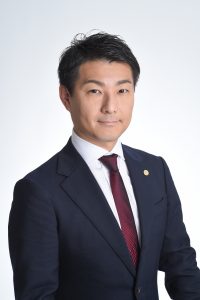 Masakazu Murai Immigration consultant, financial advisor 18 years’ experience in Investment Banking at Mitsubishi UFJ Morgan Stanley. He had provided financial advisory more than 500 entrepreneurs and senior management.
Gyoseishoshi Immigration Lawyer
– Co head of the Tokyo Gyoseishoshi Association, Minato branch
CMA(Japanese financial analyst license)
CFP (Certified Financial Planner)
MBA in Entrepreneurship
CONTACT US TODAY