
Representation of Directors’ Names and Addresses in Japanese Corporate Registration
Representation of Directors’ Names and Addresses in Japanese Corporate Registration
When officers or directors of a Japanese company are foreign nationals, the rules governing the notation of
their names and addresses differ significantly from those applicable to company trade names
(shogo). Unlike company names, alphabetical (Roman-letter) representations are not permitted
for the personal names and addresses of officers in Japanese commercial registration.
As a general rule, all such information must be transliterated into Japanese characters,
most commonly into katakana.
Katakana Notation of Foreign Personal Names
When a foreign national’s name is converted into katakana for registration purposes,
the family name and given name must be written without a space.
Accordingly, “John Smith” is typically registered as:
ジョン・スミス
In addition, katakana notation must be based on actual Japanese phonetic pronunciation.
However, multiple phonetic renderings may exist for a single foreign name. A representative example is the name
“Micheal,” which may be rendered in katakana in several ways, such as:
- マイケル (Michael)
- ミハエル (Mihäel / German-style pronunciation)
- ミヒャエール (Eastern European-style pronunciation)
In such cases, it is standard practice to confirm the individual’s authentic pronunciation
with the person concerned or related parties, and to adopt the version that most closely reflects the actual spoken name.
Foreign Nationals with Chinese Character Names
For foreign nationals who possess names written in Chinese characters, additional limitations apply.
Simplified Chinese characters or other character forms not used in Japan cannot be used
for registration purposes. These must be converted into standard Japanese kanji that are legally usable
in Japan’s registry system.
In the case of Korean names, the registrant may generally choose between:
- Katakana representation, or
- Kanji representation based on the commonly accepted Japanese rendering.
Notation of Foreign Addresses in Japanese Registration
The same transliteration rules apply to foreign residential addresses.
Overseas addresses must also be converted into katakana or standard Japanese notation.
For example, a U.S. address such as:
“12345, ○○○○ State, ○○○○, Southeast Street 6789”
must be rendered in katakana-based Japanese format reflecting pronunciation, rather than being written in Roman letters.
Practical Compliance Risks in Name and Address Registration
- Alphabetical spelling of personal names is not accepted in corporate registration.
- Name spacing between first and last names is not permitted in katakana notation.
- Simplified Chinese characters and certain foreign character systems are legally unusable.
- Incorrect phonetic conversion may trigger registry corrections or delays.
- Foreign addresses must always be converted into Japanese-script format.
Because director information is a core element of Japan’s commercial registry,
even minor inconsistencies in katakana spelling or character usage can result in registration rejection,
correction orders, or procedural delays. Foreign founders are therefore strongly advised to verify all
name and address representations at the documentation stage—prior to notarial certification and filing.
FAQ: Registered Head Office Address in Japan: Legal Requirements for Foreign Entrepreneurs
FAQ: Japan Company Name Rules: Selecting a Trade Name (Shogo) for Incorporation
FAQ: Business Purposes and Licensing Requirements in Japan: Articles of Incorporation Compliance
FAQ: Capital Contributions and Foreign Remittance Regulations in Japan
FAQ: Immigration Status Required for Foreign Entrepreneurs and Business Executives in Japan
Professional
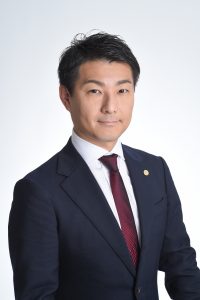 Masakazu Murai Immigration consultant, financial advisor 18 years’ experience in Investment Banking at Mitsubishi UFJ Morgan Stanley. He had provided financial advisory more than 500 entrepreneurs and senior management.
Gyoseishoshi Immigration Lawyer
– Co head of the Tokyo Gyoseishoshi Association, Minato branch
CMA(Japanese financial analyst license)
CFP (Certified Financial Planner)
MBA in Entrepreneurship
CONTACT US TODAY